Introduction
In an age when technology is reshaping every aspect of our lives, education is no exception. One of the most exciting and forward-thinking concepts gaining traction is Classroom 20x. Designed to harness the power of digital tools, artificial intelligence (AI), and interactive media, Classroom 20x aims to multiply the effectiveness, engagement, and adaptability of traditional learning environments. In this article, we’ll explore what Classroom 20x means, how it works, its potential risks, and why it’s relevant — especially for diverse audiences including students in Pakistan and beyond.
What Is Classroom 20x?
Classroom 20x isn’t a single app or product — rather, it’s a visionary educational ecosystem that reimagines how teaching and learning happen. Rather than relying solely on lectures and textbooks, Classroom 20x brings together several elements:
-
AI-driven adaptive learning that customizes content to each student’s pace and style.
-
Real-time analytics and dashboards for teachers to monitor student engagement and progress.
-
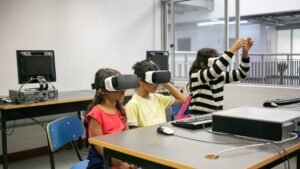
Immersive technologies like Virtual Reality (VR) and Augmented Reality (AR), making abstract or complex concepts more tangible.
-
Collaborative digital spaces where students and teachers can work, discuss, and co-create.
-
Flexible, hybrid learning modes: in-person, remote, or blended.
The “20x” in the name is symbolic — suggesting that this model aims to amplify the impact of education dramatically (up to “twenty times” more effective, broad, or efficient, in a visionary sense).
How Classroom 20x Works
Core Components
-
Adaptive Learning Platforms
AI algorithms assess a student’s performance, strengths, and weaknesses, then adjust content accordingly. -
Immersive Technologies
Through VR or AR, students can explore virtual labs, historical sites, or scientific phenomena in ways that are otherwise hard to replicate in a traditional classroom. -
Real-Time Analytics
Teachers have access to dashboards that show student engagement, comprehension rates, and even emotional or attentiveness indicators. -
Collaboration Tools
Cloud-based environments (e.g., shared whiteboards, document collaboration) let students and teachers work together, share feedback, and track group progress. -
Scalable Infrastructure
Classroom 20x is designed to be scalable — from small pilot groups to full school or district implementations, with infrastructure that supports growth. -
Teacher Role Transformation
Instead of being the sole transmitter of knowledge, teachers become facilitators, mentors, and learning designers.
Legality of Classroom 20x in Different Regions
Because Classroom 20x is primarily a pedagogical concept rather than a content-pirating or streaming site, its legality depends greatly on how a school or institution implements it. Here are key considerations:
-
In most countries, using AI platforms, VR, or cloud tools for teaching is entirely legal, as these are legitimate educational tools.
-
Copyright comes into play when copyrighted content (videos, textbooks, media) is used within the system.
-
In educational settings, there may be exemptions for public performance rights or display of copyrighted works under certain conditions. For example, U.S. copyright law provides a “face-to-face teaching” exception for classroom use.
-
In online or hybrid classes, fair use doctrines may apply, but they are nuanced.
-
The legal risk increases if copyrighted content is used outside licensed or permitted contexts, or if there is a public performance without proper rights.
For users in Pakistan, or any specific region, the laws depend on local copyright legislation. Many countries have provisions for educational use, but these are not universal, so institutions should consult legal experts.
Potential Safety Risks & Security Concerns
While Classroom 20x holds vast potential, there are several risks that schools, teachers, and students must be aware of:
-
Data Privacy
-
Learning platforms and AI often collect large amounts of student data (performance metrics, behavior, engagement).
-
Without proper safeguards, this data could be misused.
-
Schools must ensure compliance with data protection laws and adopt transparent policies.
-
-
Cybersecurity Threats
-
If the system is cloud-based, platforms could be targeted by hackers.
-
Inadequate security could lead to data breaches, exposing student information.
-
-
Digital Divide
-
Not all students have equal access to devices, high-speed internet, or VR equipment.
-
This may widen educational inequality if not addressed.
-
-
Overreliance on Technology
-
Too much screen time may affect health (eye strain, poor posture).
-
Students might miss out on face-to-face social interactions or develop less resilience in non-digital settings.
-
-
Ethical Use of AI
-
Bias in AI algorithms could unfairly advantage or disadvantage students.
-
Decision-making based purely on data could ignore contextual or human elements.
-
Why People Use Classroom 20x
Here are some of the main driving reasons behind the adoption and interest in Classroom 20x:
-
Personalized Learning: Students get content tailored to their level, pace, and style, which can boost engagement and understanding.
-
Engagement & Motivation: Immersive tech like VR, gamification, and interactive tools help make learning more enjoyable.
-
Data-Driven Insights: Teachers can identify struggling students early and intervene proactively.
-
Flexibility & Scalability: Hybrid models allow learning outside traditional classrooms; schools can scale up easily.
-
Future Skills: Exposure to AI, collaboration tools, and digital problem-solving prepares students for modern workplaces.
-
Efficiency: Automating administrative tasks (grading, feedback) frees up teachers to focus more on mentorship.
Types of Content Available in Classroom 20x
The richness of Classroom 20x lies in the diversity of content it supports:
-
Interactive Lessons: Multimedia-rich modules powered by video, simulations, and real-time quizzes.
-
Virtual Labs / Simulations: Using VR or AR, students can conduct experiments safely in a virtual space.
-
Collaborative Projects: Cloud-based documents, shared whiteboards, team problem-solving exercises.
-
AI-Generated Practice: Adaptive quizzes, exercises, and learning reinforcement tools.
-
Analytics & Reports: Dashboards for progress tracking, engagement metrics, predictive insights.
-
Supplementary Materials: E-books, articles, and resources tailored to each student’s trajectory.
Pros & Cons
Pros
-
Highly Personalized: Adapts to individual student needs.
-
Engaging & Modern: Uses interactive, immersive tech.
-
Data-Driven: Real-time feedback for students and teachers.
-
Flexible: Supports hybrid and remote learning.
-
Scalable: Can grow with the institution.
-
Teacher Support: Automates routine tasks, giving teachers more room to focus on pedagogy.
Cons
-
Costly Implementation: VR, AI, and infrastructure can be expensive.
-
Privacy Risks: Sensitive student data must be handled securely.
-
Digital Inequality: Not all learners may have equal access.
-
Over-Dependence on Tech: Could reduce human interaction.
-
AI Bias & Ethical Concerns: Decisions made by algorithms may be flawed.
-
Training Demand: Teachers need professional development to effectively use such systems.
Copyright Considerations
Given that Classroom 20x may involve copyrighted media (videos, texts, simulations), copyright law is a central concern:
-
Public Performance Rights: To show video content in a classroom, a school may need public performance rights unless exceptions apply.
-
Fair Use: In some jurisdictions, showing short clips or portions may fall under fair use — but it’s not a blanket right.
-
Licensed Content: The safest route is to use content that is licensed for educational use.
-
Digital Distribution: If distributing content digitally (e.g., through Classroom 20x), the institution must make sure they are not infringing rights.
-
Ethical Use: Even if something is technically allowed, schools should consider the moral obligations: respecting creators, obtaining permissions, and modeling good copyright behavior.
Safe & Legal Alternatives
If the full Classroom 20x vision is not yet feasible, or if copyright/licensing is a barrier, there are several safer and legal alternatives to implement similar ideas:
-
Licensed EdTech Tools: Platforms like Google Classroom, Microsoft Teams for Education, Moodle, etc.
-
Educational Subscription Services: Use legally licensed video services designed for classrooms (e.g., educational streaming platforms).
-
Open Educational Resources (OER): Free, openly licensed textbooks, courses, and simulations.
-
Public Domain Media: Use media that is free to use (classical literature, public domain videos).
-
Institutional Licensing: Schools can negotiate with content providers for educational licenses.
-
Low-Tech Hybrid Models: Even without VR, use collaborative cloud tools, shared documents, and adaptive quizzes.
Online Safety Tips
To maximize benefits and minimize risks in a Classroom 20x setup, here are some practical safety guidelines:
-
Select Trusted Platforms: Use reputable, secure learning platforms with strong privacy policies.
-
Implement Data Protection: Neutralize risks by anonymizing data, restricting access, and training staff.
-
Set Clear Usage Policies: Define who can access what content, and under what conditions.
-
Train Educators: Provide training on digital literacy, cyber hygiene, and responsible AI use.
-
Engage Parents & Students: Educate them about data privacy, screen time, and safe behavior.
-
Use Secure Infrastructure: Ensure networks, cloud storage, and endpoints (devices) are secure.
-
Monitor & Audit: Regularly review usage logs, data practices, and security protocols.
-
Use Accessible Tools: Ensure all students have fair access by providing necessary hardware or alternatives.
Cultural Relevance for the Audience (e.g., Pakistan / South Asia)
Understanding how Classroom 20x can resonate specifically with audiences in Pakistan (or similar contexts) is crucial:
-
Bridging Educational Gaps: Many schools in Pakistan face resource constraints; digital tools can help bring quality education to remote areas.
-
Local Adaptation: Lessons can be localized—study materials can incorporate regional curricula, languages, and cultural contexts.
-
Digital Inclusion: As internet access grows, hybrid systems help students who may not attend physical schools consistently.
-
Teacher Empowerment: Professional development in digital pedagogy empowers Pakistani teachers to innovate.
-
21st-Century Skills: Emphasis on AI, collaboration, problem-solving prepares Pakistani youth for global marketplaces.
-
Cost Efficiency: While high-end tech is expensive, phased or hybrid implementations can be more cost-effective than building physical infrastructure.
Conclusion
Classroom 20x represents a bold and transformative vision for the future of education — one that leverages AI, immersive technology, real-time data, and collaboration to create more personalized, engaging, and flexible learning experiences. While implementation challenges like cost, privacy, and equity are real, the potential benefits are profound. For regions like Pakistan, Classroom 20x offers an opportunity to modernize education, empower teachers, and better prepare students for a rapidly changing world.
Yet, as with any powerful system, responsibility is key. Institutions must carefully manage data privacy, copyright, access, and training to ensure that the system uplifts all learners without compromising ethics. By doing so, Classroom 20x can evolve from a futuristic concept into a practical, impactful reality.
Frequently Asked Questions (FAQs)
-
Is Classroom 20x a specific app or company?
-
No — Classroom 20x is more of a conceptual framework or ecosystem. It represents a modern, tech-enabled approach to education rather than a single commercial product.
-
-
What makes Classroom 20x different from regular online classes?
-
Unlike standard online classes, Classroom 20x integrates AI, VR/AR, real-time analytics, and adaptive learning to customize experiences and boost engagement.
-
-
Are there legal concerns when using copyrighted videos in Classroom 20x?
-
Yes. Schools must consider public performance rights and fair use or obtain proper licenses for using copyrighted content.
-
-
How can schools in low-resource areas adopt Classroom 20x?
-
They can begin with more affordable tools: cloud-based collaboration, open educational resources, and adaptive quizzes — building gradually toward more advanced tech.
-
-
Is student data safe in Classroom 20x environments?
-
It can be, if the institution enforces strong data protection practices, uses platforms with reliable privacy policies, and educates stakeholders about cybersecurity.
-
-
Will teachers lose their role if AI is used heavily?
-
Not at all. In fact, Classroom 20x redefines the teacher’s role. Teachers become mentors, facilitators, and learning designers rather than just content deliverers.
-
-
Can Classroom 20x be implemented in Pakistani schools?
-
Absolutely. By localizing content, providing teacher training, ensuring internet access, and using phased implementation, Classroom 20x can be tailored to fit the cultural and infrastructural context of Pakistan.
-
About the Author